Category: Feature

21 posts

Standard

Introducing InqScribe 3: The Video Annotation Tool You Love, Now with Privacy-First AI Transcription

For more than two decades, researchers, filmmakers, journalists, and transcriptionists have relied on InqScribe to take notes, log footage, and create transcripts by hand—quickly and accurately. With InqScribe 3, we’re keeping everything people already love about InqScribe… and adding something big: Automatic AI transcription, performed privately on your computer. So whether you’re discovering InqScribe for…

Read more

InqScribe was built for Qualitative Research

InqScribe is pleased to sponsor the 2026 WCQR - World Conference on Qualitative Research. We originally built InqScribe to help with our own qualitative research projects, so the needs and workflows of researchers are baked into our design. The core idea is simple: a text-first editor with a built-in media player. As you type free-form…

Read more
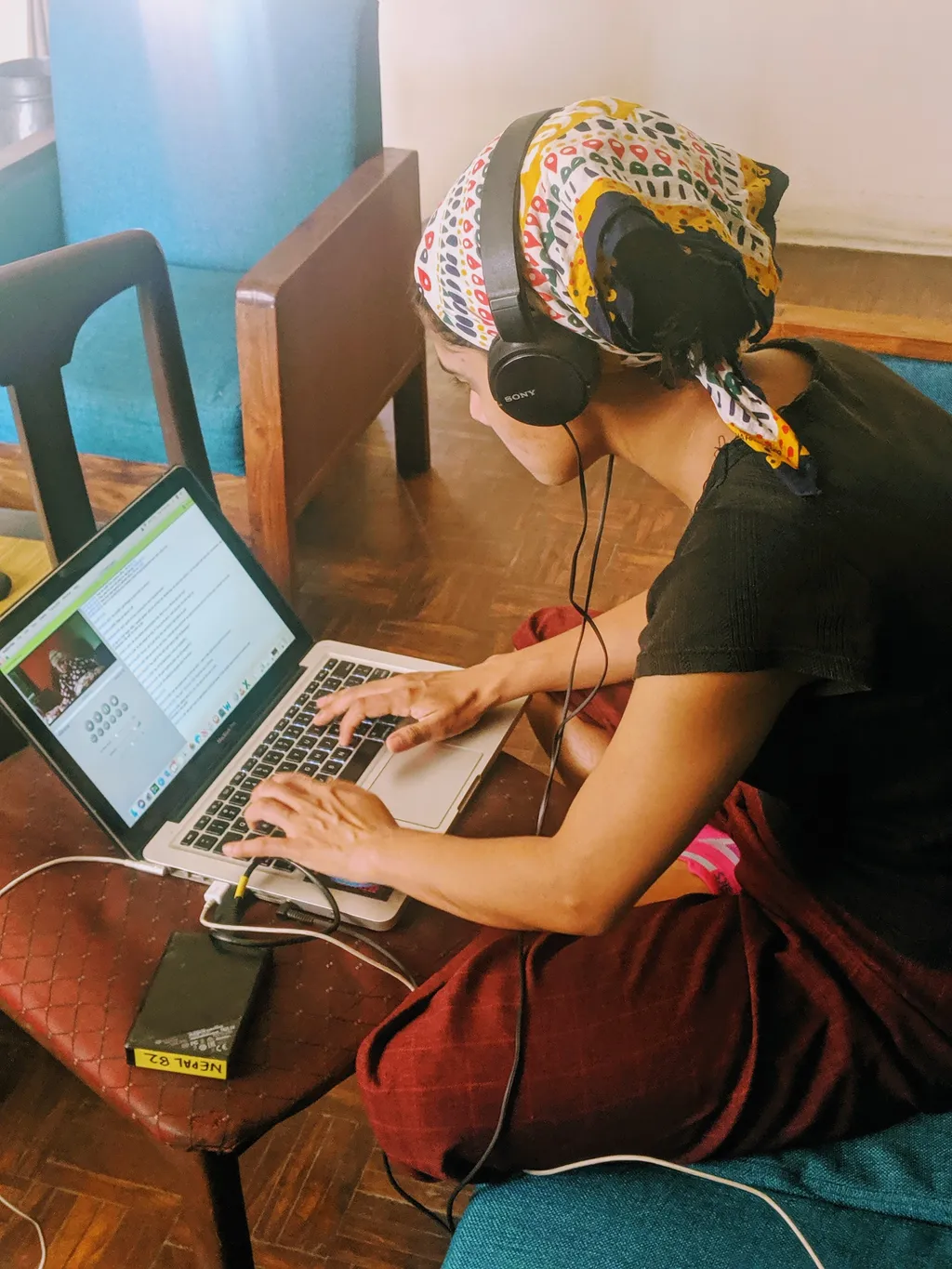
Aliana's team uses InqScribe to transcribe translations for the film. Image

Guest Blog: Giving Voice to Nepali Women

If you live in a small community and speak a regional language, it’s difficult for your story to get out. Aliana uses InqScribe to translate the experiences of Nepali burn victims to a wider audience. By: Aliana Monodee, a documentary filmmaker with Tribhuvan University In Nepal, many women suffer discrimination based on caste and gender.…

View photo
Image

Guest Blog: Standing Up for Nature with InqScribe

Amidst a busy travel schedule around remote regions of Kenya, Hannah & Jamie rely on InqScribe to capture inspiring stories of wildlife conservation. By: Hannah Pollock and Jamie Unwin, filmmakers and founders of Stand Up For Nature We believe visual media and films are an incredible tool for education and sharing peoples stories, but how…

View photo
Newly Displaced Syrian Refugees Standard

Guest Blog: Refugee Stories

By now, you’re surely heard news of the “refugee crisis” affecting countries across the globe. Did you know that InqScribe is used in the field to document the stories of these refugees? By: Karl Schembri, Regional Media Advisor in the Middle East for the Norwegian Refugee Council As a humanitarian NGO, we respond to crises…

Read more
Standard

Guest Blog: Transcribing Spider Monkeys

Did you know you can use InqScribe to transcribe just about any language? Yes, even the language of spider monkeys. By: Sandra E. Smith Aguilar, PhD student at the Interdisciplinary Research Center for Regional Development (CIIDIR) Campus Oaxaca, of the National Polytechnic Institute (IPN) in Mexico. My research focuses on understanding the relationship between spider…

Read more

InqScribe and Final Cut Pro 7: Subtitling Workflow for Filmmakers

We occasionally feature guest bloggers who can offer insights into different workflows. For the beginning documentary filmmaker, managing Final Cut Pro (FCP) workflows in a foreign language in combination with InqScribe can be daunting at first. This is why we asked Chad Braham, an experienced InqScribe and FCP user to describe his workflow in detail.…

Read more

InqScribe 2.2 Released

We’ve just released an update to InqScribe: version 2.2. This is a free upgrade for all users. Download the update here. Or, if you’re currently running v2.1.1, select “Check for Updates” and InqScribe’s internal update checker will offer to download the update for you. For Mac users, InqScribe is now a signed app to improve…

Read more

Using InqScribe With Dropbox to Share Media With Others

InqScribe users often work collaboratively. Since InqScribe transcripts are very small files, it’s easy to share them with colleagues -- say, as an email attachment. But media files are usually huge, and unless you have access to a shared server, sharing the media files that go with your transcript can be difficult. Enter InqScribe’s Media…

Read more

Guest Blog: A Final Cut Pro Workflow for Editing in Another Language

Finding the right workflow for a project can be a challenge, especially when you have multiple languages, multiple tools, and multiple collaborators in the mix. In our latest guest blog, Chad Braham, an editor and Director of Media Production at WORDonCancer.org describes in very helpful detail how they’ve developed a translation workflow that starts in…

Read more

InqScribe 2.1.1 Released

We’ve just released a minor update to InqScribe: version 2.1.1. This is a free upgrade for all users. Download the update here. Primarily, the update improves the behavior of timecode-specific fields (such as the Start Time field) to better match Final Cut Pro’s behavior. In addition, InqScribe will now automatically download updates for you. Also,…

Read more

Guest Blog: “This is definitely the fastest transcription we’ve ever done.”

Filmmakers like InqScribe for a multitude of reasons. In this latest guest blog, part of our ongoing series highlighting how folks use InqScribe, Bongiorno Productions, an award-winning filmmaking duo, talk about how they’re using it with their latest project. Got an interesting story about how you’re using InqScribe? Please contact us at info@inquirium.net if you’d…

Read more

Guest Blog: Using InqScribe with Final Cut Pro and Multiple Languages

InqScribe’s ability to export transcripts to Final Cut Pro has made it particularly useful for documentary filmmakers working in multiple languages. In this latest guest blog, part of our ongoing series highlighting how folks use InqScribe, Carlos Sandoval, an award-winning filmmaker, talks about how they’re using it with their latest project. Got an interesting story…

Read more

Second Language Learning Using Films

A part of our occasional series highlighting interesting uses of InqScribe In addition to transcriptionists and documentary filmmakers, researchers make up a large portion of InqScribe users. Although, in this case, we hit two of our favorite topics simultaneously: research and education. Alex Gilmore, a professor at the University of Tokyo, just published a book…

Read more

Guest Blog: How Documentary Filmmakers Transcribe and Subtitle With InqScribe

InqScribe has many different kinds of users. But the majority of our users can be categorized into three groups: university researchers, professional transcriptionists, and documentary filmmakers. To highlight how our folks are using the tool, we would like to do an occasional feature where we invite our users to be guest bloggers. Here’s our first…

Read more